Italian certificates are older than most that reach us. A comune may hold your record in a bound ledger written by hand, with entries added in the margin across sixty years, and a photocopy of that is what arrives in our inbox.
We read those properly. Your Italian birth certificate translation is prepared in English for HM Passport Office, the Home Office, register offices and universities, whether the original is a modern printout or a page from a 1930s register.
Handwritten comune records read by a person
Atto di nascita or estratto, we check which
Accents kept exactly as your passport shows
Margin entries and later notes carried across
Never run through software, whatever its age
Back with you in 24 to 48 hours
A UK office checks a short list on any translated certificate. The wording, the date, a signature by hand, the translator's professional body, and a UK address and telephone number that work. Every page we issue carries all of it.
Before that comes a question about the document itself. Italy issues an atto di nascita, the full registry entry, and an estratto, which is a summary of it. The summary often leaves out what a British caseworker needs to see.
Send us a photo and we will tell you which one you are holding before you pay for anything. Plenty of people find out only when a comune or an office sends the file back.
Order your certified birth certificate translation and we will look at the original before quoting.
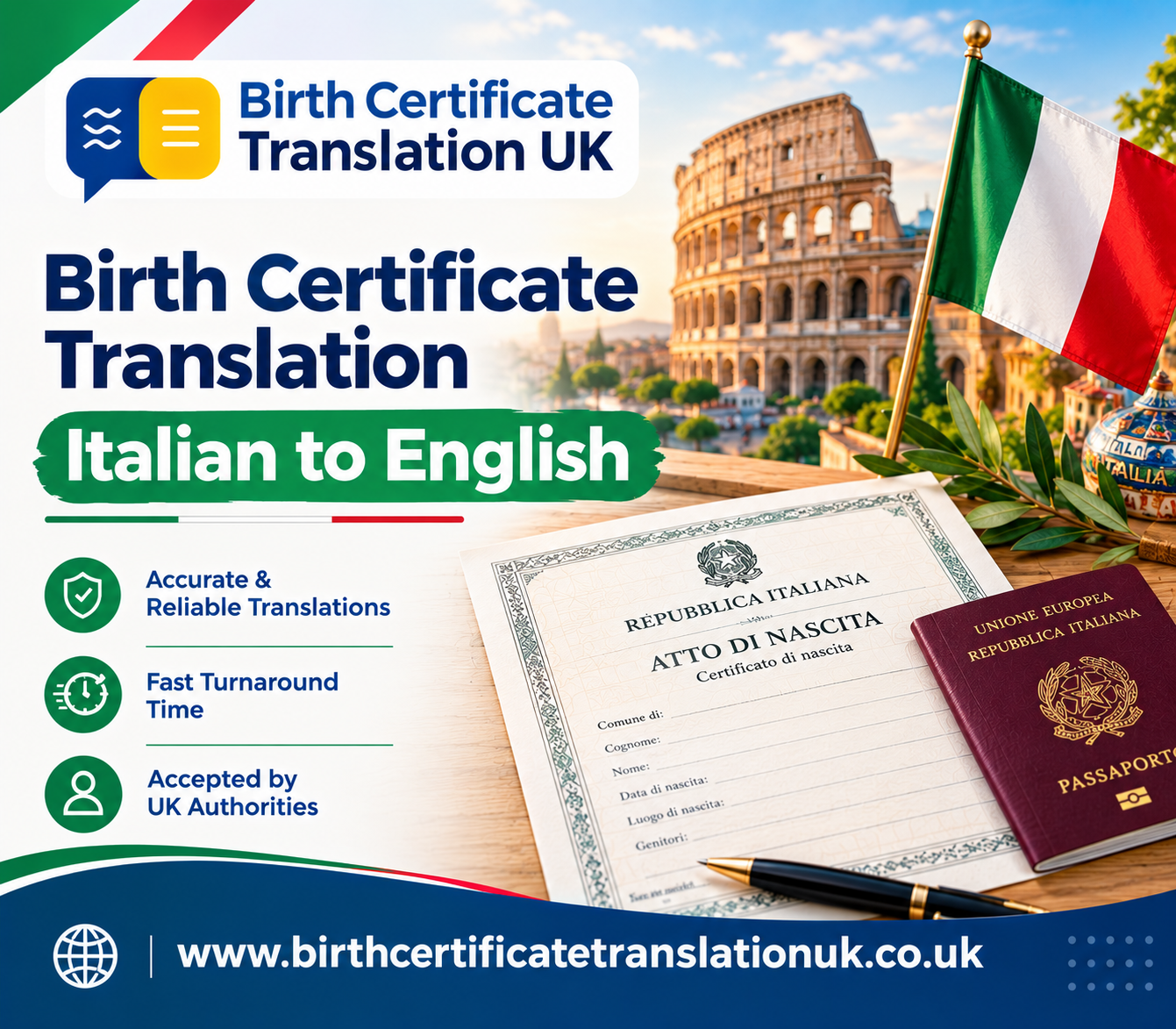
An Italian certificate reaches several different offices in Britain, and each is reading it for its own reasons. Below we explain where these documents usually go and what the person on the other side is trying to establish.
The largest share of our Italian work. Nationality casework is read slowly, and your certificate is often needed alongside a parent's. Sending both together means one translator writes the family name identically on each.
HM Passport Office reads the certificate for a date of birth and the parents named on it. Italian records list parentage in a running paragraph rather than boxes, so the English page has to make it plain.
By this stage the Home Office holds years of your details. A name spelt differently on a new translation stops the file, so we take the spelling from your BRP rather than choosing one ourselves.
Admissions teams ask for a birth certificate with your qualifications, and UK ENIC often wants it for a comparability statement. One certified page usually covers both.
A registrar cannot open your notice file until every document is readable in English, and the waiting period starts only once they are satisfied. A previous marriage means the decree goes in too.
Right to work checks and DBS applications need identity papers an employer can actually verify. Our UK address and phone number are printed on the page so they can.
Three steps, and the first takes a minute on your phone. Your original stays with you, which matters because a British office may want to see it beside the English page at an appointment.
Italian certificates translated into English for UK offices.
Families from Italy settling here, and students arriving.
ATC accredited, with ITI and CIOL member translators.
One agreed price, given upfront, with nothing added after.
Italian records carry detail that gets lost if a document is handled quickly, and that lost detail is where files stall. Below we explain what we do with each part of your certificate so nothing on the page is a surprise.
Records from the 1920s to the 1950s are written by hand in a bound register, often in a looping script that software cannot touch. A person sits with those and works through them line by line.
The estratto is a summary and frequently leaves out what a British office needs. We look at which version you have uploaded first, so you never pay to translate a page that cannot be used.
Italian registers gather annotations over decades, added when a marriage is recorded or a name changes. Those notes are part of the certificate and appear in the English version.
Italian names lose their accents in British systems and can read as a different person. We keep them and show the passport spelling alongside so both versions are visible on one page.
Family surnames were often altered when relatives came to Britain. Where the original and the modern spelling differ, we show the link rather than quietly settling on one.
A circular stamp across the foot of the page carries wording most people skip over. It appears in English rather than being described as a stamp or marked illegible.
The atto di nascita where you can get it. It reproduces the full registry entry, including the parents and any notes added later.
The estratto is a summary. Some UK offices accept it, many do not, and the difference only shows up when a file comes back.
Ask the comune for the atto, or for an estratto per riassunto dai registri if that is all they will issue. Send us whichever you hold and we will tell you honestly whether it is likely to pass.
Yes. Comune registers of that period were written by hand, often in a script that takes practice to read at all.
A person works through those rather than software, which fails completely on this kind of page and produces something an officer can see is wrong.
Photograph the page in good light with all four corners visible. Where a word has genuinely gone, we send you a crop of that section and ask before putting anything down.
They are translated with the rest. Those annotations are part of the official record, not decoration.
Italian registers gather entries over decades, added when a marriage is registered, a name changes, or a correction is made. A UK caseworker comparing the two pages will notice if one is missing from the English.
Photograph the whole page, including anything running down the side or added at the bottom.
Yes, exactly as they appear on the certificate.
British systems drop accents routinely, and a name changed that way can read as a different person to someone checking two documents against each other.
Send us the spelling printed on your passport as well. We show both on the page so nobody has to decide which one is correct.
It matters, and it is worth telling us before we start.
Surnames were frequently altered on arrival in Britain, sometimes by a clerk rather than the family. The Italian record holds one spelling and your British documents hold another.
We show the original as it appears and note the modern form alongside it, so the connection between the two is visible rather than something you have to explain in a letter.
Yes, and for a citizenship file it is usually necessary.
One translator across the whole set means the family name is written the same way on every page. Where documents span three generations, that consistency is what an officer is checking for.
Most are ready within 24 to 48 hours, and same-day is possible when an appointment is close.
A modern printed certificate moves quickly. A handwritten register page with sixty years of margin entries takes longer, because it has to be read carefully before anything is translated.
Send your deadline with the photo. We confirm it before taking payment, and say plainly when it cannot be met.
Yes, and if we produced it the correction costs nothing.
It is usually one of three things: no date printed on the page, no translator details, or a name that did not match the passport. Sometimes it is an estratto being used where the full atto was needed.
Send us the letter with the original certificate. We work from their exact wording, tell you what it means in ordinary language, and issue a replacement page. Most go back within a day.
© 2026 BirthCertificateTranslationUK.Co.UK. All Rights Reserved.