French files nearly all end up in the same building. The Home Office wants a French birth certificate translation in English before it will look at a settlement, visa or citizenship application.
We translate the copie intégrale, the extrait and the livret de famille for UK government offices. Certificates from France, Belgium, Switzerland, Morocco, Algeria and Tunisia are all read the same way here. Send both sides and tell us who asked for it.
Send the copie intégrale, not the short extrait
Certificates from France, Belgium or North Africa
Accents kept exactly as your passport shows them
Livret de famille translated in the same order
Every mairie stamp translated, not just noted
Back with you in 24 to 48 hours
A caseworker reading your file is not marking the French. They are looking for a handful of marks on the page: the wording, the date, a real signature, the translator's membership, and a UK address they can ring.
What goes wrong earlier is the certificate itself. France issues a short extrait and a full copie intégrale. The short one leaves your parents off, and a caseworker matching family names has nothing to work with.
Tell us which office wrote to you and we will check the version you have before quoting. If it is the wrong one, you will know while there is still time to order another.
Every page we issue meets the same standard as our wider certified translation of birth certificate work, so nothing on a French file is treated as a special case.
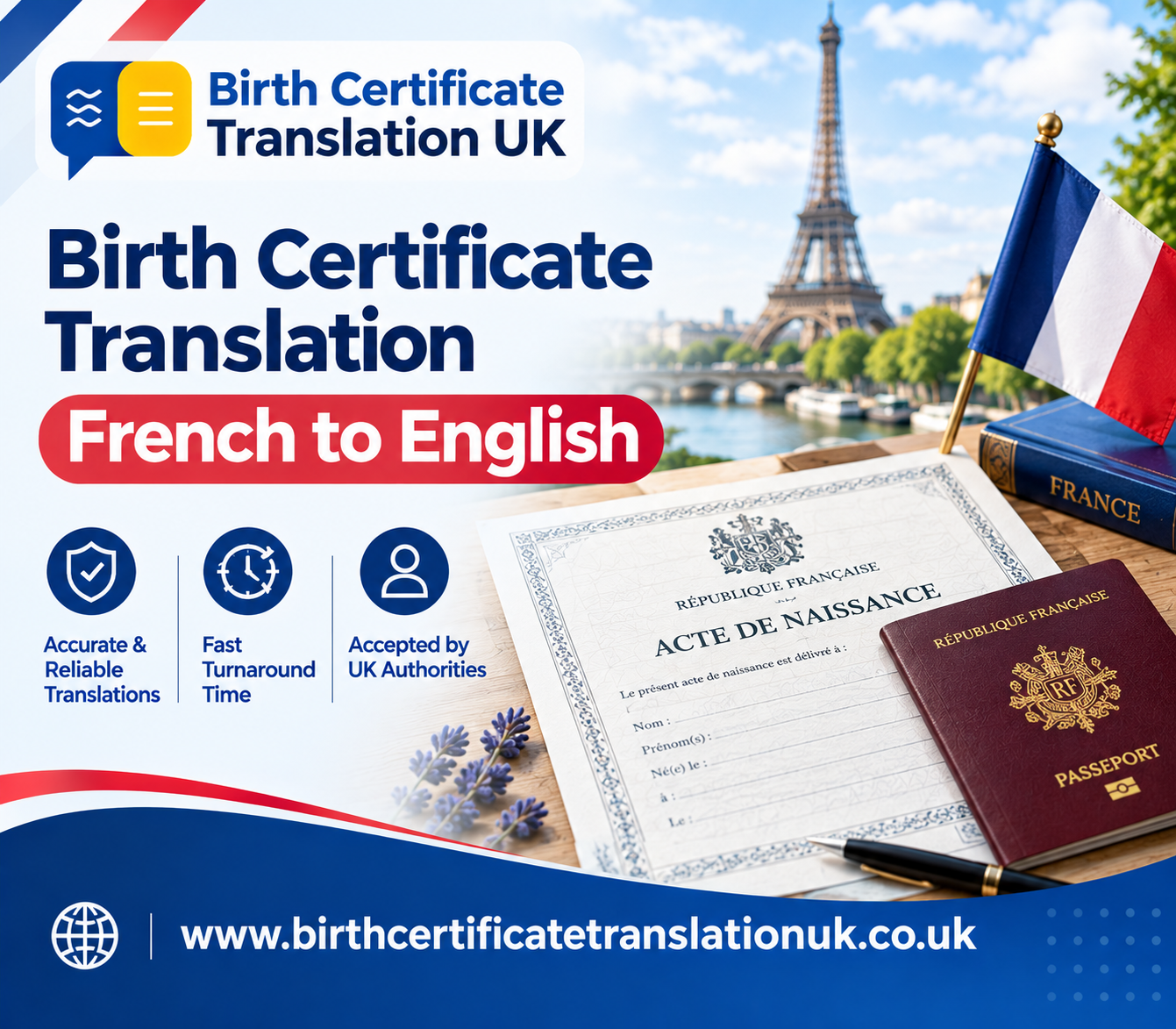
A French certificate rarely goes to just one kind of office. Below we set out where these files usually end up, and what the person reading yours is trying to confirm, so you can see which one matches your case.
The largest share of our French work. By this stage the Home Office already holds years of your history, so every name and date on the new translation has to agree with what is on file. We copy the spelling from your BRP rather than choosing one.
Nationality casework is read slowly and closely. Your certificate is often needed alongside a parent's, and sending both together means one translator writes the family name the same way on each.
Visitor, student, spouse and work routes all ask for identity papers. What matters here is the deadline, because biometric appointments do not move. Tell us the date when you order.
A registrar checks your papers at the notice appointment and the waiting period does not begin until they are satisfied. A French certificate goes in translated, usually with a divorce decree if there has been an earlier marriage.
Councils use the certificate to confirm a child's age and who the parents are on a school place form. Universities ask for it with your qualifications. The same certified page works for both.
Right to work checks and DBS applications need identity documents that an employer can verify. Our UK address and phone number sit on the page so they can.
Three steps, and the first one takes a minute on your phone. You keep the original French certificate, which matters because an office may want to see it next to our English page.
French certificates turned into English for UK government files.
People on settlement, visa and citizenship routes.
Members of the ATC, with ITI and CIOL translators.
A fixed figure agreed before you pay, with nothing added later.
French records carry small things that British ones do not, and those are where files get held up. Below we explain what we do about each of them, so you can see exactly what you are paying for.
The short extrait is the most common reason a French file is returned. We check which version you have sent before quoting, so you never pay to translate a page that cannot be used.
A name loses its accent in most British systems and can read as a different person. We keep it, and show the passport spelling alongside so the two documents clearly name one person.
Certificates in French are issued well beyond France. A Belgian commune, a Swiss canton and a Moroccan registry all set the page out differently, and we work with each of them regularly.
French certificates carry stamps that run across the text and notes added in the margin years later. All of it appears in English rather than being described as a stamp.
A livret de famille, a divorce decree or a parent's certificate can go in the same order. One translator means one spelling of every name across the set, which is what a caseworker checks for.
Older French records are typed on carbon paper and fade badly. If a word is unclear we send you that section and ask, rather than putting down something that looks close.
The copie intégrale d'acte de naissance. It carries your parents' names and their details, which is what a UK caseworker matches against the rest of your file.
The extrait is the short version. It gives your name, date and place of birth and stops there. On a settlement or citizenship file that is rarely enough.
You can request the copie intégrale free from the mairie where the birth was registered, or online through the service-public site. If you already hold the extrait, send it anyway and we will tell you whether it will do.
Not at all. French-language certificates come from Belgium, Switzerland, Luxembourg, Morocco, Algeria, Tunisia, Senegal and several other countries, and we handle all of them.
What changes between them is the layout and the wording of the registry sections, not the standard of translation a UK office expects.
Tell us where yours was issued when you order. It helps us set the page out the way your caseworker will expect to read it.
Yes, and this matters more than it sounds.
A name stripped of its accent can read as a different name entirely, and the Home Office may already hold the accented version from an earlier application.
We keep the accent on the page and show the spelling from your passport or BRP alongside it, so there is no doubt the two documents refer to one person.
Yes, and it is worth doing in the same order.
The saving is useful, but the real reason is consistency. One translator writes every name, date and place the same way across the set, and a bundle that disagrees with itself is exactly what a caseworker notices.
Usually yes. Older French records were typed on carbon paper and the ink goes grey rather than disappearing.
Photograph it in daylight with all four corners in the frame. If one line is genuinely unreadable, we email you a crop of that section and ask what it says.
We would rather send one question than put down a word that looks close. A guessed place name is the sort of thing that comes back to you weeks later.
You tell us, and we copy it exactly.
If you have applied before, the Home Office has a version of your name on file from your BRP or an earlier visa. A translation that spells it differently makes a caseworker stop and check whether two files belong to one person.
Send us the spelling printed on the card, not the version you believe is most correct. That one line prevents most of the delays we see on French files.
Yes. Give us their address at the order stage and the signed copy goes straight to their office while the PDF comes to you.
We work with immigration solicitors and OISC registered advisers regularly, and can invoice several documents together where an adviser sends work often.
We post anywhere in the UK, and to France if you have not moved over yet.
Send us what they wrote along with the original certificate and we will put it right at no charge.
It is nearly always one of three things: no date printed on the page, no translator details, or a name that did not match the passport or BRP.
We read the actual objection rather than guessing, explain it to you in plain words, and reissue. Most go back to the applicant within a day.
© 2026 BirthCertificateTranslationUK.Co.UK. All Rights Reserved.